Catch it before it wanders off the front page, my review of Resident Evil: Afterlife is live over at Twitch. It's about what you would expect given the limited narrative aspirations of the series, as Glenn Kenny so astutely observes, they're "the most subtext-free of any zombie movies."
It's perhaps this that keeps me coming back to the first and third movies: they're uniquely a collection of moments, sometimes interlinked, other times not, that feel like a free-flow blast of whiz-pow scenes that verge of being describes as non sequiturs. More than anything else I feel attracted to the empty calories the one might be into Mallomars or White Castle burgers. In moderation, it's not too bad for you and for a moment they provide a respite from complexity. Resident Evil as a film franchise isn't over-burdened by any particularly weighty thoughts, save to maintain fidelity to the long-running game series and present a few over-the-top action set pieces that, for my tastes, peaked at the laser grid in the first entry.
The third film in the series, Extinction admirably recreates this sequence as one of a series of traps for one of the infinite Alices revealed at during the opening of that film. It's a shame Afterlife does away with this plot point early on in its running time (the Resident Evil films: where the important plot bits bookend the actual meat and potatoes of the movie).
I just made the connection that this being the 4th movie in the franchise it's directly cribbing from the 4th movie in the game series (at least 4th chronologically with regards to the canon), which also took a wild left turn away from the conventions of the previous entries in the franchise. The games scaled back their reliance on the Umbrella Corporation as the prime villains, changed the setting, the flow of the action, and even did away with zombies as the primary enemies (the Ganados of 4 and 5 are mind-controlled humans).
...that's not to say either of these deservedly unsuccessful recent Warner releases fit in that category so close to my heart: the "good B-movie." With the release of Machete this week and the continued success of The Expendables, it felt like as good a time as any to think about what makes a good B-movie and what makes something like The Losers or Cop Out happen to the viewer. The failure of the latter examples stems from, I'm afraid a lack of commitment somewhere down the line to being a B-movie.
In the case of the Losers, it seemed that at some point up the pipe someone decided that a story about a bunch of hardened soldiers out for revenge against the conspirators that ruined their lives needed to be a PG-13 affair. Not so much. If anything, The Losers could have stood to have been a bit more ruthless, pulpy, and downright nasty. Instead, what came to the screen felt scrubbed and sanitized. Not to get too far into comparing source material and adaptation but it felt like all the juice (for lack of a better term) had been drained in the translation. Gone was the nervy paranoia of the Vertigo series by Andy Diggle and Jock as well as the harder edge of the characters. Gone was the nearly silent femme fatale Aisha, only to be replaced by the chatty film counterpart.
I have no objection to talk - it's why I thought I'd give the pretty-much hated Cop Out a chance. I hoped that Smith, who gives good talk in his movies, would deliver the goods in a buddy cop comedy that was a nice homage to the Lethal Weapons of yesteryear. Smith, and really everyone involved, feels under committed here. There's not a single laugh to be had and the action is - well, it'd be kind to call it lackluster. It all seems to be built on familiarity and perhaps the assumption that seeing Bruce Willis and Tracy Morgan interacting will be enough to generate comedy cold. Or something, I don't really know what anyone was thinking with this mess. It's pretty terrible and on second thought I'm not sure what I was thinking checking this one out. Maybe it was the choice of a KRS-One cut for the trailer.
Respect to KRS-One.
With that in mind I thought I'd share some virtues I'd love B-movies to adhere to:
Don't be ashamed of being shameless. Big emotions, lots of violence, and sex should be judiciously applied, where appropriate. And if aren't ashamed of being shameless...
When looking at some of Cronenberg's early work, or Cameron's*, or even all the way back to Val Lewton, you'll find that none of them were afraid to go big with the elements of their stories.
Make sure all that emotion, sex, and violence counts.
The best second-tier entertainments are always about the payoff. Cronenberg, Cameron, and Lewton's movies typically have a hell of a payoff.
Don't be afraid to screw around with your genre.
I LOVE twists and turns in genre flicks and outright mashups precisely because they bring something unexpected to the table.
Actually know your genre. REALLY know it.
It's something I'm trying to do with my own writing: increase the breadth and depth of my film knowledge so that when I have something to say about genre it's coming from an informed place.
*I'd argue that Cameron remains a b-movie director who just happens to excel getting the budgets for his visions. For all the pomp and seriousness of films like Avatar and Titanic they still feel like
Two movies I've been anticipating for a while are Anders Morgenthaler's animated revenge thriller Princess (2006) and Natasha Arthy's Bend it Like Beckham for the kung fu set, Fighter (2007).
Princess is an odd package on paper: August (Thure Lindhardt) is a priest whose porn star sister has recently and left her damage but smart 5-year-old Mia (Mira Hilli Moller Hallund) to care for. Shocked by the emotional harm done to his young niece, August embarks on a mission to erase any vestige of his late sister's porn career while working his way towards her lover/boss, Charlie.
Using traditional animation, CG, live action inserts, and grainy camcorder video the story follows August on his quest in the present while giving viewers hints about how the rift formed between the formerly close brother and sister. The camcorder views in particular (always from August's perspective) show his compulsion to document his sister, no matter how sketchy the situation.
August is a bit off - he hates pornography (with good reason, in this case) but he also seems deeply, profoundly broken in his own way, even before his sister's exploitation. In flashbacks - which are sometimes accompanied by a distracting CG trip through August's synapses - he's always the observer and never the actor. Morgenthaler and co-writer Mette Heeno's script has a tendency to keep August's camera rolling when it should not be (particularly in the tense, confrontational second scene with the landlord).
The present-day sequences show August attempting to connect with Mia, even trying to gain a measure of catharsis for her by allowing her to participate in the revenge against her exploiters and abusers. The script is a little unclear on how many people mishandled this unfortunate child - I think it was just one character, but August seems to believe Charlie was involved as well.
The movie's position, I think, is that Christina and Mia's exploiters should be destroyed absolutely and completely. The two that we see, Preben (Tommy Kenter) and Sonny (Soren Lenander) are essentially vile gangsters. Charlie remains elusive but we understand from the shrine he has built for Christina in the local cemetery that he's a grotesque.
The viewer gets a Death Wish vibe from the whole thing, with the very capable August taking down these unsympathetic scumbags, working his way up the food chain. Even the cops are somewhat on August's side, opining that Preben and Sonny are lucky they're getting any help at all. August's attacks against the pornographers (and later their gun-toting henchmen) are fairly stylized, with the camera following the trajectory of bullets and crowbars as they hit their mark.
The film ultimately becomes exploitation cinema, all things considered, with its blood red-tinted focus on the violence and the almost playful nature of August's vengeful outing. Consider the scene in the warehouse early in the film where he has Mia pouring the gasoline while her stuffed animal prances in the background (a common conceit is that Mia thinks her stuffed bunny, Multe, is alive).
Why was animation chosen as the primary method to tell this story? According to IMDB it's about 20% live action and 80% animation - that sounds about right. Obviously, there's the appeal of splitting the past from present via format but what did it serve making the present animated? I suppose as a practical consideration, animating the film allowed the filmmakers to execute some of their more visceral set-pieces (how else could they afford to show the destruction of a city block of porn shops?). Still, there's a sense of the fantastic to the events given the slightly stylized nature of the characters and Mia's inner world being manifest through the ever-present Multe that creates distance instead of drawing you in. The split between the "real" (August in the past) and just plain moviemaking distracts more than it attracts if that makes any sense.
What do we make of the character's fate at the end of the movie? Or the friendly porn starlet who aids Mia in the mansion? The very final scene would hint that August's quest was just and redemptive while the acts themselves and their physical repercussions would tend to read as an outsized reaction on his part. I think in crafting such a strange brew of film styles and focusing on the delivery method of the content, the creative team perhaps got a little muddled in the actual, you know, content of the content. Ultimately Princess comes off as a revenge pic of the sex and murder genre - think 1979's Hardcore with George C. Scott or the original Get Carter. Unfortunately it puts up so many layers between its lead and its message that the movie is difficult to get behind.
Fighter similarly has a problem with a somewhat inscrutable lead. A coming-of-age Kung Fu film should be an easy sell to me but the script and performances never really generate any sort of relatable or believable tension. Instead, we get a retread of of numerous teen girl empowerment films which aims for grit but hits melancholy.
It's about Aicha (Semra Turan) a high school student cool to her strict Muslim parents' aspirations for her to become a doctor. The tomboyish lead would rather be practicing martial arts and watching grainy interviews with the late great Bruce Lee, though. The tension is obvious well-worn - traditional immigrant culture (her family is Turkish) vs. modern opportunities for a girl in the west. Writer/director Natasha Arthy and co-writer Nicolaj Arcel's script just dresses it in martial arts drag.
I've mentioned before that Aicha is inscrutable: some of that is from a script that's vague on exactly what her character wants but the other part is Turan's performance which is incredibly internal. Aicha spends a lot of her time literally running between locations and keeping her eyes down and mouth shut when she gets there. Of course she opens up a bit when she joins a Kung Fu club run by the Hong Kong mainstay Xian Gao (Crouching Tiger, Fong Sai Yuk a.k.a. The Legend) but that liveliness is more the result of well-choreographed if choppily-edited fight scenes.
The movie only seems alive during the wire work-heavy action scenes (which culminate in a tournament that's more Fight Club than The Karate Kid) but for the remainder of its running time the story is on autopilot. The story can barely muster any surprises or variation on the type of film, instead coasting on the formula. If you guessed her father was an ogre, her mother was knowing and disappointed, and that she had an older sibling who was the family's pride and joy then you were right on all counts. Is there a Danish boy outside of her traditional community who has her eye? You bet, but in this case it's the slightly slimy Emil (Cyron Bjorn Melville) whose character is never really given anything beyond an overtly sexual interest in Aicha.
I can't fault the look of the film, however. The grime and grit of the lower class Denmark estates are convincingly visualized through lots of handheld camera work and a high level of grain in the image.
I saw Frank Darabont's adaptation of Stephen King's "The Mist" back in its summer release back in '07 and kind of hated it. It was that rapid-build kind of hate as well where you like it marginally in the theater and by the time you hit the exit you're convinced you've somehow been... I don't know, swindled?
The film was is a "hell is other people" piece about a small New England town and the thick mist that covers it after a mysterious storm. The townies and some vacationers end up holing up in a supermarket when they learn that the mist is inhabited by all manner of vicious creatures from somewhere else. Of course as a microcosm of American values and types (the elitist lawyer, the noble artist, the barking mad evangelist) it's only a matter of time before conflict breaks out between the natives.
The ideological gulf is between Tom Jane's pragmatic artist character and Marcia Gay Harden's bible-thumping Miss Carmody. Harden's character spins the events in apocalyptic-mystic terms, equating the monsters with divine retribution due to the litany of complaints one gets with any zealots: people are having the "wrong" kind of sex, abortion is murder, cats are sleeping with dogs, etc.
Carmody was painted in such broad strokes that it took me out of the movie when some of the townspeople started coming around to her side of things by the midway point. Harden gives a foaming at the mouth, foul, bitter performance (note, I'm not qualifying it as "good" per se) and it felt like a cheat on the part of the story to generate artificial tension. By the end of the film some of her followers are calling for human sacrifice in their panicked need to assuage a conception of God closer to King's "Children of the Corn."
So why did I rewatch it recently? I can't really answer that in any satisfying way. I was compelled to take it in again, though. Two years out the acting is still rough (Tom Jane's last scene unintentionally gets a laugh), the CGI is still dodgy, and Mrs. Carmody is a broad as ever but somehow it kind of works now in a way that it didn't back in '07.
I'd say part of it - if I'm being honest, most of it - has to do with the seismic emotional shift the country has gone through post '08 election or at least the cable news version of the national attitude anyway. We seem more balkanized than before and some on the right appear just plain mean. In particular, the religious right has been co-opted by some of the most vitriolic voices in the Pat Robertson mold. Some of the most nasty thoughts have been given voice recently by religious leaders (which happens with any real cultural sea change) but what's most appalling is that there are too many nodding their heads in agreement or at least not calling bullshit.
There's a real feeling of blood in the water right now with the people who've been sharpening their knives for years waiting for some kind of ultimate confrontation between the people and the state, black against whites, or Christians vs. everyone else enjoying the increasingly hyperbolic and hostile mood out there.
It remains to be seen how much of it is the cable news cycle giving voices and legitimacy to fringe elements but there's an element out there, increasingly vocal, that mimic the sentiments of the Mrs. Carmodys of the world. That is, they're the folks that believe that "something's not right" with the country, and wouldn't mind a little bit of bloodletting to get America back to the "good old days" (i.e. cultural hegemony, minorities "in their place," and a simpler black and white moral spectrum).
Also, as overwrought as the ending to the movie is, there's some subtle, maybe even accidental comment there about how leaving the crazies to it and bugging out will get you nowhere. Those final apocalyptic moments get kind of silly with Tom Jane's extended "noooooooooooo," and I can't dispute that at all. At the same time, it's kind of poignant - the sense that the loudest, craziest voices have won out and forced the voices of reason to beat a hasty, bloody retreat.
Again, "The Mist" hasn't suddenly become transformative art but it has become very much of the moment.
Please note the images I selected from the recent Teabagger rallies were selected with a Google search for the words "teabagger + racist." These are intentionally slanted images but it was alarmingly easy to find them to justify my point.
Last weekend I checked out both Inglourious Basterds and The Baader-Meinhof Complex. Both are stylistically two fairly different movies. But without the intent of denigrating or elevating either one I must say that on a certain level the two films are incredibly similar thematically.
On the surface they seem wildly different - QT doing his movie-movie thing about World War II and the power of big "c" Cinema. Some quibbles notwithstanding I'm beginning to feel like it was one of my favorite movies of the year as a cumulative effort (but more on that in another post). As for BMK, it a rousing action film wearing the skin of a counterculture 60's action film about the extreme leftist sentiments sparked by Western intervention in Vietnam, the perceived police state mentality of the German government, etc.
But look deeper and it's evident that both are movies about appearances and rep. In a 9.1.09 posting titled "Real of fictitious, it doesn't matter..." Jim Emerson makes a very thorough dissection of IG and the role of reputation and appearance throughout the film. Emerson postulates (and I agree with his analysis) that Tarantino crafts characters whose reputations precede them, noted by nicknames ("Aldo the Apache," "the Jew Hunter," "The Bear Jew") and even self conscious asides by the movie itself (notably Stiglitz's introductory vignette).
This common thread is shared by BMK which follows the Red Army Faction (RAF) terrorist/revolutionary group in its heyday in the late 60's and early 70's. Part of their mandate - one shared by the Basterds - is to strike fear into the German power structure, creating tension and demoralization of what they perceive as immoral and even inhuman oppressors. Point of fact, part of the RAF propaganda explicitly described the police as pigs and effectively declaring open season on the men in uniform while at the same time dissuading attacks on "the workers" (i.e. civilians).
While the RAF leadership doesn't have evocative nicknames like the Basterds, their identities are known and they have very public faces. In fact, one of the most effective tools in ultimately rounding up the RAF leadership was a sort of "catch 'em all"-style wanted poster with images of the known members of the outfit displayed with x's marking the ones that had been captured of killed by the authorities. Pay attention to the trailer as well - as much as it comes through there in the actual film there's a very pervasive rock star/outlaw swagger to the early exploits of the RAF. It's a handy bit of synchronicity that the fashions of the group members echos some of the styles seen today (skinny jeans, form-fitting clothes with a retro vibe) that's at odds with the proletarian aims of the group.
Indeed, for all its talk of anarchic abolition of controlling capitalist systems, the RAF was incredibly well-marketed in its day, with frequent distribution of flyers bearing the group's logo. Compare and contrast this to the Basterds' unique form of propagating their fear message which involves marking German survivors with swastikas on their foreheads. This act serves the double purpose of forever unmasking the Nazi soldier while also acting as the guerillas' calling card to the German people.
There's also the question of authenticity - it comes up a couple of times in Basterds as subtext (maintaining a pretense of authenticity to survive) and is part of why the characters/historical figures of BMK struggle. Shoshanna Dreyfuss a.k.a. Emmanuelle Mimiuex must maintain the mask of the Gentile to avoid extermination while Andres Baader strains in every scene to prove how dedicated he is to the proletarian struggle, often exploding at his compatriots for what he perceives as their lack of authenticity. In the middle of the film, there's even a moment where the BMK leadership doubts the authenticity of a group member and defames the person in order to have them liquidated.
The point of similarity between the two films simultaneously creates a contrasting effect as Taratino gives us these larger-than-life figures whereas by the end of BMK the characters have been reduced to an extent after making themselves mythic. One of the last lines in the latter film has the speaker telling the assembled group that their heroes weren't victims or victimized - that they weren't martyrs but instead subjects of their own choices. In this manner, we the audience and the assembled group listening to the aforementioned speaker learn that the BMK leadership was neither a cause to follow nor objects to be edified.
Having just seen District 9 this weekend I have to come down on the side of critical consensus and say that I found it to be an exhilarating experience that was very much of the moment. "Of the moment" means that the plot doesn't hold up to greater scrutiny after the fact, with some story elements remaining poorly-explained or outright ignored (particularly with regard to the central issue of the use, value, and application of the Prawn technology).
Still, the exuberance of the thing - the energy of the action, the humor invested in the many situations protagonist Wikus Van de Merwe stumbles or is thrown into - makes it work in a way that the recent Star Trek reboot worked.
One thing that has left me a little irked since the movie bowed was the insistence (critically, at least) that the movie is a parable for Apartheid when it instead feels reflective of the recent immigration crisis experienced in South Africa. For a time there reports would pop up on CNN about attacks by SA locals on immigrants from Zimbabwe and other displaced persons and it was actually pretty hairy. According to this NY Times piece from 2007 something like 3900 illegal immigrants we being deported weekly. They were viewed by locals and preexisting immigrants as a challenge to low-wage jobs and homes in informal settlements. It was all about hustling to get a place on the totem pole even if it's at the bottom.
If I recall correctly the violence reached a fevered pitch sometime in the middle of 2008 with immigrants being burned out of their homes or even killed but in the time since nothing about the issue has really popped up on my radar.
Obviously, I get that Apartheid is the more recognizable cultural issue* from the area that still has resonance to this day but it doesn't really jibe with the issues presented in the film. Plus, I kind of feel like this "good immigrant/bad immigrant" story is thematically richer today across all borders. Not just in the U.S. but in any country where the poor feel they have to duke it out with the recent arrivals - the fear that the "unwashed masses" will somehow wash over everything that has been built before by the "good" immigrants (i.e. the ones that were there first).
It puts me in the mind of Miriam Colon character from Sayles' Lone Star - a successful Latina businesswoman and Mexican immigrant who had pretty much convinced herself she was born on this side of the border and had no compunction talking trash about anyone else trying to cross the border. The script painted her as a fairly nasty character made so by an initially hardscrabble life after the death of her husband.
I'm curious as to how much co-screenwriter Neill Terri Tatchell Blomkamp were conscious of the immolation of Zimbabwean immigrants and the violence and all that when they were putting the script together. Blomkamp's Alive in Joburg short was shot/released in 2005, around the time that the massive wave of Zimbabwean immigrants were crossing the border into South Africa. I suspect it had to have at least been somewhere in his mind during the making of both the short and the current feature.
*It should be noted that directed Neill Blomkamp has gone on record as saying that he's not trying to make an "issue" and that his District 9 is more of a big action film with some sociopolitical undertones kind of informing some of the narrative.
I complained recently about my difficulty playing SF4 - the control issues and the learning curve caused me to perhaps whine like a little girl with a skinned knee. I've put in a few more hours with the game and finally beaten it once (with Ken, on Very Easy, thanks for asking).
The arduous process of climbing the ladder and beating Seth brought me back to the hateful experience of being so incredibly bad at a game that you don't want to play it any longer.
The Sirlin article I linked to yesterday has opened up conversations about difficulty in the game and how accessible it is to the casual player. I'm by no means a casual player, but I'm also not one of the core Street Fighter devotees. Was this game made for me? More importantly, how can game developers ensure that their game is accessible for a wide audience while still delivering the values of a hardcore experience?
Throwing the Controller
Sometimes a game is tough due to the complexity and sometimes a game is just broken. I think SF4 falls into the former category: it requires some history with both the genre and this particular franchise to make any headway. There's a great observation in the GiantBomb review about the lack of a comprehensive training mode that teaches newcomers how to play the game beyond simply teaching the moves.
As Stephen Totilo noted, there's something approximating a training mode, buried in the Challenges which teaches the players the rudiments of each character's moves. What it doesn't teach is practical strategy - the theory of playing the game. When should I block? At what point in the Shoryuken can I snatch Ken out of his move and execute a throw or an EX move? What's an EX move?
Going into the game and learning these things has been an uphill process, even on the simplest modes of the game.
Mortal Kombat: Deadly Alliance from a couple of years ago had a more compelling and functional training mode that had many of the practical features I'm talking about here. Each tier of the practice mode would challenge the player to match not only commands but learn blocking skills and transitions between the different forms.
Apples and Oranges and Grenades
The modern shooter seems to have gotten this, with hit titles like Gears 2 and Call of Duty 4: Modern Warfare including tutorial segments that are at once cohesive with the overall game experience. Both are unabashedly games for the core - the former being a shooter requiring strategic movement around the battlefield and the latter having a more frantic combat environment.
The tutorials of each game reflect this. COD4's training mode even has a speed run mode, emphasizing the main feature of the game - navigating the battlefield swiftly and eyeing target placement. Gears has a more laid-back attitude with fewer targets and an emphasis on using the environment to engage the enemy.
Fallout 3 has one of the more interesting and compelling tutorials of recent memory, couching the core mechanics in the player character's growth from infancy to young adulthood. Beyond the narrative tie-in, the game also carves out moments to highlight the given mechanic that the player needs to learn for the overall game.
However, these games are broader experiences, lacking the minute details of a fighter like SF4. There are literally thousands of variables in any given SF match - the characters being used, the Super and Revenge bars, range and hit detection. How can anyone coming into this franchise fresh come to grips with the mechanics of the game?
The Arcade mode could potentially fill this need but the difficulty curve is very steep with characters laying the smack down on even the lowest levels. Learning your character's move priority becomes a frustrating, hateful chore, making the gamer (at least this one) wonder if the game is even worth learning.
This Game Hates You
SF4 puts me in the mind of Ninja Gaiden 2, a game which combined bruising difficulty with little to no tutorial.
The hack and slashfest is geared towards the core and actually revels in this (check the Achievements of the game - they all speak to the alpha players in the audience). The punishing difficulty of the game and the twitch experience it presents are for a certain segment of the audience who seeks out a level of frustration in their gameplay.
This is very present in SF4 - there's actually a "tax" (as described by Sirlin) to open up all of the characters in the game. Only by overcoming some ridiculous in-game hurdles can players open up the full gameplay experience. Locking characters behind such prohibitive barriers is not conducive to accessibility - it's telling the audience that the game, in actuality, is for the core.
The Last Thing I'll Say About SF4 for A While
I'm going to stick with the game - as I've said before there are things I do like about it. But I don't think I'll ever really gain any sort of profiency with it as I have some of the other titles mentioned above.
Which is a shame, because I really had high hopes for causing some trouble online.
The latest entry in the long-running Street Fighter series is great, except for the part about being able to play it out of the box.
What are you bitching about now?
If you're familiar with fighting games, you'll know that a certain level of precision is needed to execute moves - at times in split-second increments. These moves require semi-precise manipulation of an analog joystick or standard D-pad.
Using this...
... means precision ain't happening. So this means I have to buy a special edition controller to play the game.
Ah, you bitch and you bitch. Buy the new controller already!
Well, I would, but unfortunately it appears to be out of stock just about everywhere right now or going for prison rape painful prices on eBay.
Well how is the game, at least?
I honestly don't feel comfortable giving an assessment of the game at this point - not without being able to play it the way it was meant to be played. A part of me (the consumer with no money) feels that the game should have been designed with the limitations of the existing hardware in mind.
Alternately, I feel that would have done a disservice to the existing market for the game - people who've been playing Street Fighter in some form or other for the last 20 years.
Further hampering an honest assessment of the game is the fact that I, more of a Tekken man, am kind of crap at the Street Fighter games. I'm suffering from the anxiety Stephen Totilo at the MTV Multiplayer blog discussed recently prior to the release of the game. That is to say - how can you judge a game which, all things being equal you would not be good at anyway?
Fighting games are kind of a closed system.
Yeah.
On Gamasutra, Nayan Ramachandran makes some excellent, but brief observations about the accessibility of a game like SF4 for the new player. He even expresses concern that it might be considered too accessible by the hardcore.
I'm not sure it is - I think playing this game (crappy controller notwithstanding) requires a certain rewiring, especially if someone (like your esteemed writer) has trained the old thumbs and neurotransmitters for 3-D fighters over the last decade and a half. The loss of the Z axis in gameplay feels weird... wrong somehow.
And yet here I am trolling the internet for a $40 controller to use with the $60 game I just bought. This means that (barring some kind of cognitive dissonance I'm willfully ignoring) I must like some aspect of the game.
It IS a gorgeous game, and when by chance I'm able to execute one of the many complex moves there's great positive feedback both visual and mechanical.
Still... I wish I'd waited until I could buy the controller.
Tomorrow, I'll talk a little more about the training mode (or lack thereof) and the steep difficulty curve in this game.
Tycho at Penny Arcade has weighed in with his first thoughts on RE:5. Again, I'd like to play the game myself and don't see myself getting riled up as I would given say, discussing the work of Ed Zwick.
I came across this badly-written and reactionary article this morning from a gamer concerned about "Paranoia Over Racism and Sexism in Video Games." The article points out recent, well, Paranoia Over Racism and Sexism in Video Games referencing potential tempests in teapots that are Resident Evil 5, X-blades, Gears of War, and Duke Nukem.
Author "daimyo" attempts to contextualize the content of the games, trotting out the oft-used argument that a white dude blasting black zombies in Africa is just as appropriate as another white dude shooting Caucasian zombies in Eastern Europe*. Similarly, he argues that recasting musclebound, cigar chomping Duke Nukem or the members of Delta Squad would be unrealistic and that these characters are themselves, in fact, a form of stereotyping ignored by the mass media (the tough-talking alpha male).
In wrapping up his (her?) article the author rejects the spectre of government censorship of politically incorrect imagery and it's at this point that I call complete and total bullshit on this guy (or girl) and anyone else out there who continues their "leave our precious games alone" stance.
Save Our Games From the Prejudiced Media! (S.O.G.F.P.M.!)
The "is it racist or not" argument aboutResident Evil 5 has been the most incendiary rallying call for gamers in recent months, replacing Roger Ebert vs. Games as Art which threatened to consume the Internet for much of 2007. Both dust ups were actually interrelated, in that each question the legitimacy of video games and their place alongside other respectable media.
Gamers, developers, bloggers, and critics are quick to step into the fray with opinions, advice, and insults in defense of or against the industry as a whole. In general, however, it becomes a circling the wagons mentality as we lifelong fans, we hobbyist feel caught in the cross hairs of outside media forces looking for a quick, slanted story.
There's the sense in some quarters that most external criticism of the gaming industry lacks context or is itself the product of some reactionary thinker looking to censor free thought - an army of mini-Jack Thompsons out there looking to dim the green lights on our consoles. And in some cases, my fellow gamers, game critics, writers, and bloggers are right - the "gaming panic" that has sort of peaked and ebbed throughout the major news outlets since the release of the first Mortal Kombat pervades to this day.
We want games to be taken seriously, to be respected and lauded and even have their own big, stupid ratings-deprived Oscars for our favorite games.
But when it comes to real cultural critiques of the work some folks get kind of squeamish.
Seriously, "Sexbox?"
If an artist uses an image of a crucifix immersed in his own urine, he's courting controversy and challenging preconceptions about the sacred nature of icons. If a filmmaker depicts the acrimony of black and white relations in the South during the 60's he's aiming for cultural reflection. So what does it mean when the Cole Train does a braggadocio-loaded shuck and jive for the Locusts in "Gears 2?"** What does that reflect about the game, about the character, and about us as consumers of the work?
Full disclosure: the single player campaign was one of the more enjoyable gaming experiences for me from the last year, and I'll be writing about it at length at a future date. But I also hold it on the same level as I would The Rock (loved it) or Katy Perry's I Kissed a Girl (if I could punch a song in its face...) - each is a lowest common denominator cultural artifact that reflect our desire for that which is harder, better, faster, and sexier (apologies to Daft Punk). They also reflect only the surface of what each medium is able to accomplish.
Never Do a Google Image Search of "Mass Effect + Sex"
It's understandable then when major news outlets seize on the player's ability to get a little hot girl on girl action in Mass Effect or when they try to pin a heinous crime on a drunken teen having recently played a 15-year-old game. "Where is the merit, the art, in hard-talking space marines shooting alien species number 5? Why are they selling a sex simulating space opera to kids?! Think of the children!"
Well to the last question, they - Bioware - weren't selling anything of the sort and it was a non-issue created in the middle of a slow news cycle by a cynical outlet. And it was cool to see people who write about games bringing a news outlet to task for not taking a deeper critical assessment of a game.
But when do we look inward? How often do we look at the games that dominate the charts or are considered high art and ask what they say about us as gamers or broader still, as members of society?
What does it mean when your white hero totes around a gun blasting away savage Africans with his "acceptably black," British-accented sidekick? Can we extrapolate anything about ourselves from the twitchy anxiety of Raz of Psychonauts (misunderstood, put-upon, daddy issues, physcially unassuming and not so great around girls)? What does it mean when a game like Little Big Planet gives players tools for user generated content andthe first thing we do is create Super Mario Brothers 1-1?
Why are we so willing to laud how games assess the external but unwilling to confront how the game may reflect something negative about ourselves as gamers?
Is RE:5 racist? I don't know. I haven't played anything beyond the demo. I'm black and I wasn't particularly offended by the imagery in the couple of minutes of gameplay I experienced.
And I call bullshit on anyone on either side of the aisle who says it is or isn't without having played the whole thing. But the question is fair to ask given the materials Capcom has put out there - it's fair to ask and to keep asking and we should be debating this (constructively) when the game is released.
Because I believe games are an art form, I believe they are legitimate, and I believe that we have an affect on and are affected by them.
*Wasn't Re:4 set in Spain, or at least a fairly rustic stand-in?
Regular (or semi-regular) posting should resume this month. In spite of the holidays. Until then, enjoy these little nuggets of info:
I'm Sorry Mr. Lethem, But I Don't Much Care For Your Work:
After being duly impressed by Jonathan Lethem's take on Omega the Unknown, I thought I'd give his prose a try. Couldn't really get into it.
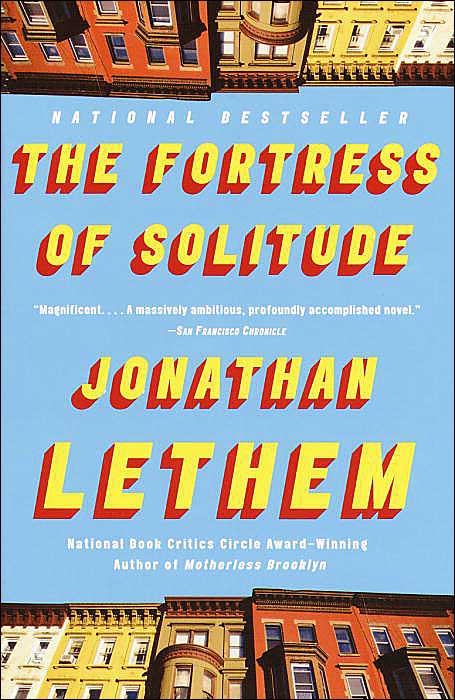
Fortress of Solitude had an interesting start about life in Brooklyn in the 70's and 80's, despite being a little worn out by hard-luck obsessive nerds thanks to The Brief Wondrous Life of Oscar Wao. But then the second half of the novel kicked in. The lead character became more unlikeable alongside prose that spelled out what he was feeling and to some extent how we should feel about him.
In my infinite wisdom, I thought I'd give him another shot - perhaps his book Girl In Landscape, described on the back cover as a surreal sci fi Western. Imagine the flaws noted above imposed upon a teenage girl's journey of self-discovery.
Moving on.
How Can We Miss You Batman, If You Never Go Away?
Last week DC dropped issue Batman#681, the final chapter of Grant Morrison's "Batman R.I.P." storyline. Newsarama, CBR, and other sites have reported that all of the Bat-family of titles will be axed in the coming months, presumably to be relaunched with shiny new number 1's.
What's bothering me is the oddity of releasing another Morrison-penned issue of Batman featuring Batman immediately after said character's presumed death a week before. It's not that I expect Batman to stay dead or anything - I'd just like to get to the epilogue (which #682 doesn't really feel like, so much as another interesting story that should have occurred in the middle of Morrison's run).
Still thought the issue was pretty neat, though, with all of the alternate takes on Batman had something else come through the window that fateful night besides a lost and confused bat.
I'd like to do a post sometime about Morrison and his fascination with branding, legacy, and the pervasiveness of pop.
Spoil Your Awful Third Act On the Cover, Why Don't You?
All things considered, I did want to give this movie a chance. But man, what a dumb twist that undid a pretty compelling and effective beginning.
Recently, I sat down to watch Neill Marshall's Doomsday, a clear homage to John Carpenter's Escape From New York. It's all there: a steely, black-clad, one-eyed protagonist traversing into a hostile, isolated area hoping to stave off Armageddon while fending with an authority figure who's kind of a prick.
While I've been enamored of Marshall's Dog Soldiers and The Descent, I think he was wrong for this material. His strengths lie in subtly communicating character and interpersonal within the context of genre films.* In attempting to ape Carpenter, Mr. Marshall may have missed the point: Carpenter rarely has a use for fleshed-out characters and instead tends to rely on broad archetypes to keep the story moving.
Carpenter and Character
Snake Plissken. Man of few words and not a whole lot of backstory. Dude even has a tattoo of a Snake on his belly (which came first - the name or the tattoo?). Most importantly, at least for Carpenter's purposes - he comes through the story pretty much unchanged. The same with Jack Burton, or Rowdy Roddy Piper in They Live, or any member of the weird gynarchy in Ghosts of Mars.** Not a single one of them changes or evovles through the course of the story - they're all rocks flung through the variety of circumstances that Carpenter has constructed.
What Carpenter was able to do in many of those cases - in defiance of most of the rules of narrative - is make this work for his stories. Jack Burton is cool and interesting and we want to see him succeed because he's pretty glib in the face of danger. Snake just doesn't give a damn and wants to get the job done despite all the complications and conflicting loyalties. And you know what Rowdy's here to do after all the bubblegum runs out.
Carpenter's strength is taking uncomplicated, tough characters and throwing them into outsized situations. Snake just wants to go free, Jack just wants to get his truck back, and Rowdy wants a job. I would argue that as soon as Carpenter started complicating his characters with backstory and motivations it began to hurt his work (James Woods' woman-hatin'-vampire-killin'-Vatican-raised the lead in Vampires being the most egregious example).
I feel like Carpenter has been able to get a bit closer to his roots with his fairly recent stint on Masters of Horror: Cigarette Burns.*** The story was direct and the hero did have an element of back story with a dead girlfriend, but really the story was about a fairly weaselly, resourceful guy trying to find a rare film print in spite of psychotic collectors and creepy German cineastes.
(Yeah. I came down on the side of Norm Reedus - Scud from Blade II. I'm as surprised as anyone else)
Climbing back to the original idea and away from the realm of pay cable, I lay part of the effectiveness of using simple archetypes in Carpenter's casting: Kurt Russell, Rowdy Roddy Piper, David Keith... Kurt Russell some more. Carpenter has cast based on the ability for a lead to alternately look like they don't give a damn but could totally, seriously mess you up if given half a reason.
In the next installment, I'd like to explore Carpenter's use and subversion of genre - particularly with regards to Big Trouble in Little China.
*See the underlying tension between Juno and Sarah - Marshall expertly sets up the tension between these two characters at the start of the movie and lets inform Sarah's choice about Juno's fate at the end of the film.
** Laurie Strode of Halloween, Sam Neill's character from In the Mouth of Madness and the Jeff Bridges as the titular Starman are all exceptions to the rule which I hope to discuss later. But Michael Meyers is totally an archetype.
*** I still haven't checked out his other entry from the series, Pro-life, so my premise could be faulty.
UPDATE: So, several friends have told me that the change from color to b&w was primarily a ratings consideration. This is based on their purchase and viewing of the R2 version of the film which has the entire sequence in glorious color.
So yet again import DVDs have proven my nemeses.
Well played, R2 DVDs.... Well played.
Thinking I'm well-versed in film, many callbacks from Kill Billthat nonetheless passed me right on by was the transition from full color to monochrome in the House of Blue Leaves sequence.
I recall it being reported at the time that the shift was done in to tone down the violence for the censors. More likely, this "concession" was actually a reference* to Men of the Monastery (Shao Lin Zi Di -- 1974), which also makes the shift from full color to monochrome when shit got real.
Most striking to me is how the filmmakers switch from black and white or sepia to red for the particularly gory moments involving the heroes. If anything, they underline the most wrenching moments. The transition also heightens the level of tension in the scene, making what was before a series of brawls, now something serious where any and everyone can get seriously messed up.**
What I respect about Tarantino's handling of the device is that he changed the tension from dramatic to comedic, using the the sequence to spotlight some of the more over-the-top violence between the two films. The violence here doesn't actually get real until it gets real, returning to the normal palette, with the Bride's victims laid out before her with limbs severed or gushing.
*I'm pretty certain this reference has been cited elsewhere by those with a more scholarly bent, but having not read their works, it's refreshing to me to meet these antecedents to work I admire on my own.
**For real, the guy at the end with the kick and the sword, and how it all goes wrong... yikes.


 is live over at Twitch. It's about what you would expect given the limited narrative aspirations of the series, as Glenn Kenny so astutely observes, they're "the most subtext-free of any zombie movies."

 or
or  happen to the viewer. The failure of the latter examples stems from, I'm afraid a lack of commitment somewhere down the line to being a B-movie.
 s by Andy Diggle and Jock as well as the harder edge of the characters. Gone was the nearly silent femme fatale Aisha, only to be replaced by the chatty film counterpart.